
Push Back Racking System
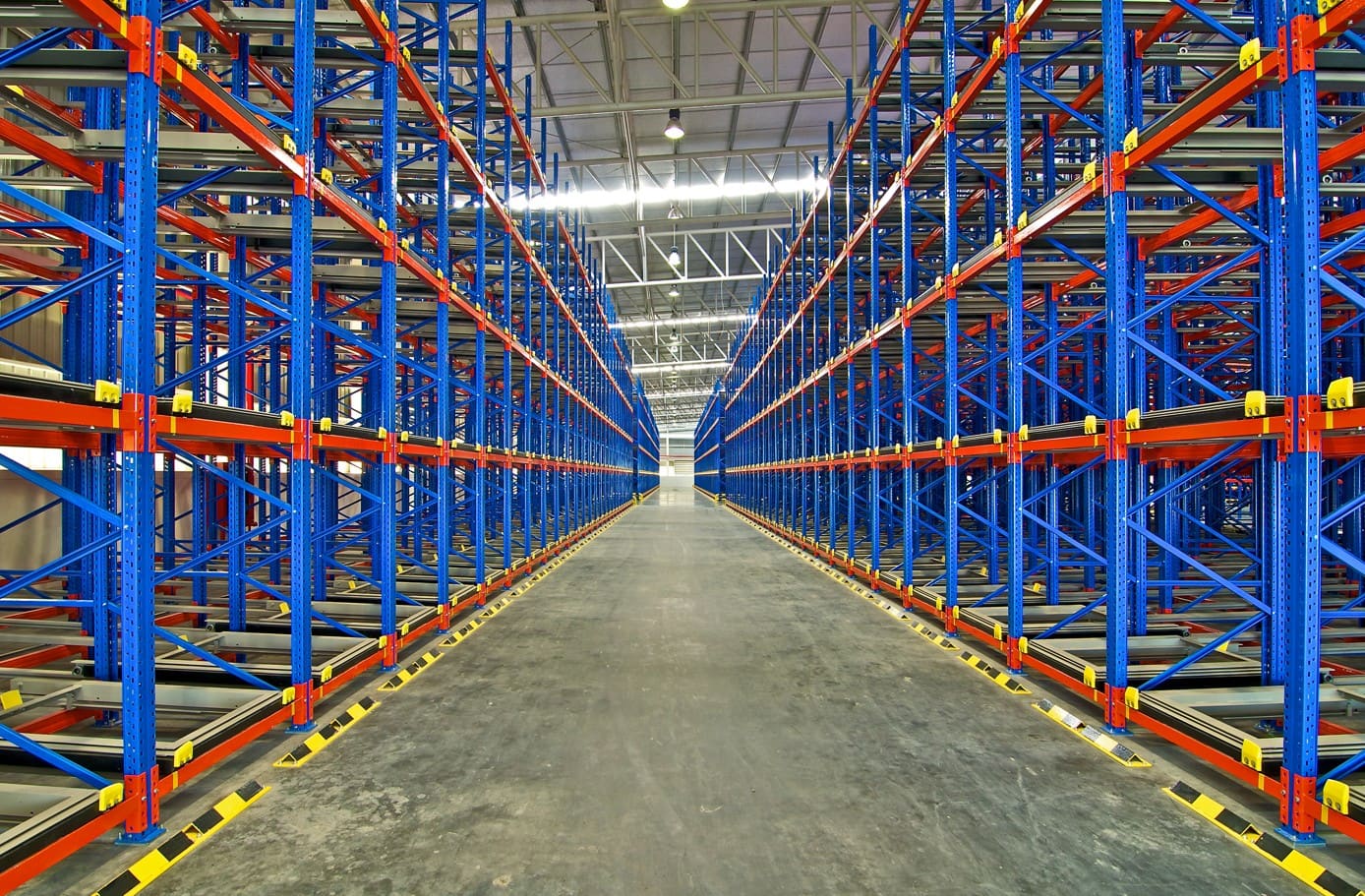
Push back racking systems are a high-density storage solution designed to improve warehouse space utilization while maintaining fast access to multiple SKUs. Using a series of nested carts or rollers on inclined rails, pallets are stored several positions deep and automatically move forward when the front pallet is removed. This makes push back pallet racking ideal for warehouses that need greater storage density than selective racking while still maintaining good selectivity and efficient pallet handling.
RACO provides push back racking solutions engineered for durability, performance, and efficient warehouse operations.
What Is a Push Back Racking System?
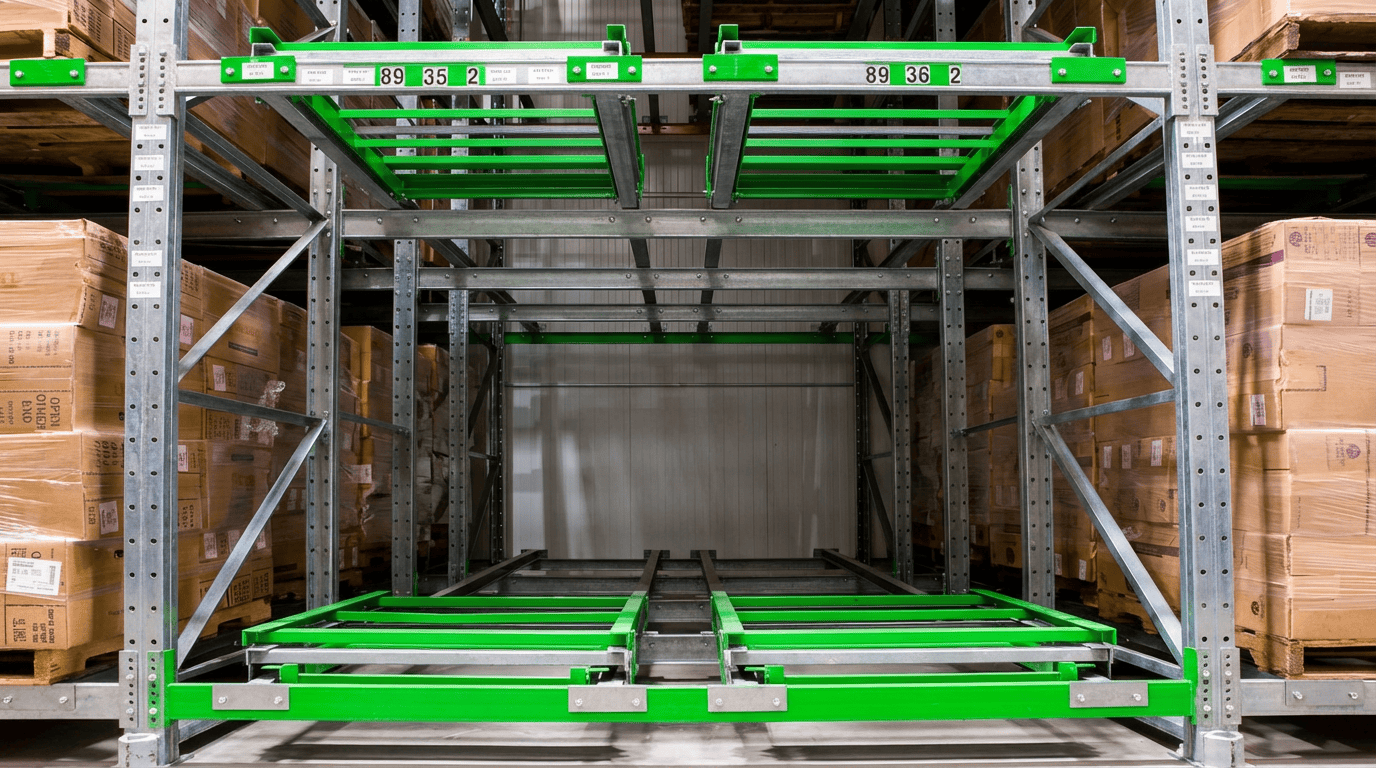
A push back racking system is a dynamic pallet storage solution that allows pallets to be stored multiple positions deep on inclined rails. Each new pallet placed into the lane pushes the pallets already stored further back. When the front pallet is removed, the remaining pallets automatically roll forward into the picking position.
Because push back racking offers dense storage and direct access from the front aisle, it is a practical option for warehouses that handle medium to high volumes of palletized inventory. This system typically operates on a last-in, first-out (LIFO) basis, making it suitable for products where strict FIFO rotation is not required.
Benefits of Push Back Racking Systems

Push back racking is often chosen by warehouses that want a balance between storage density and accessibility. It allows more pallets to be stored in less space while keeping loading and unloading simple and efficient.

Common Applications for Push Back Racking
Push back racking systems are commonly used in warehouses that store palletized products in medium to high volumes and need better space utilization than standard selective racking. They are especially effective when there are multiple pallets per SKU and inventory can be managed using LIFO rotation.
These operations benefit from push back racking because it improves storage density, reduces aisle requirements, and keeps pallet access fast from the main working aisle.

How a Push Back Racking System Works?
In a push back racking system, pallets are loaded from the front aisle onto carts or rails set on a slight incline. As each new pallet is loaded, it pushes the previous pallet backward into the lane. When a pallet is removed from the front, gravity moves the next pallet forward into position for retrieval.
This loading and unloading method allows every operation to take place from the same aisle, which improves speed and reduces forklift travel. Because storage and retrieval both occur from the front, push back racking is more accessible than some other deep-lane storage systems while still providing high-density capacity.
Key Design Considerations
Designing a push back racking system requires careful evaluation of the products being stored, the desired storage depth, and the operational flow of the warehouse. The right system should support safe pallet movement, reliable performance, and efficient use of space.
A properly engineered push back rack system helps maximize storage capacity while maintaining safe, efficient pallet handling throughout the warehouse.

Why Choose RACO for Push Back Racking Systems?
RACO provides push back racking systems designed to improve warehouse efficiency, increase storage density, and support reliable pallet handling. Our solutions are developed to match the specific product mix, pallet requirements, and operational goals of each facility.
We work closely with customers to design storage systems that maximize available space while maintaining safe access and consistent performance. The result is a durable push back racking solution tailored to real warehouse needs.
Request a Push Back Racking Solution
Looking for a push back racking system that improves storage density and warehouse efficiency?
Contact RACO to discuss your storage requirements and get a customized solution designed for your operation.
Frequently Asked Questions
Talk to RACO About Your Push Back Racking Project
Our team can help you design a push back racking system that improves storage density, supports efficient pallet handling, and fits your warehouse layout.
Contact RACO today to get started.
